Wait for our Next Sale - up to 50% OFF!

Does Perfume Oil Percentage Affect Longevity? What Actually Makes a Fragrance Last

You know that question we get every week? The one that starts with “Kitne percent oil hai?” followed by assumptions about concentration and longevity? We’ve heard it countless times. The problem is, most of the advice floating around on the internet reduces fragrance performance to a single number, and honestly, that’s just not how this works.
The Issue With Numbers
Spend five minutes scrolling through fragrance e-commerce sites in India, and you’ll notice a pattern. Every brand is shouting about their percentages. “30% oil! 25% concentration! Extra strong!” It’s become the default way people compare fragrances, and I get it. It feels logical. More fragrance oil should mean better performance, right?
Except it doesn’t work that way in practice.
What actually happens when you just keep pouring more concentrate into your alcohol base is that things get heavy. Not just heavy in smell—physically heavy. The composition becomes denser, less refined. The top notes get smothered. The whole thing feels like it’s sitting on your skin rather than breathing with it. An 18-20% EDP built with intention will absolutely outlast a carelessly formulated 30% juice that’s just loaded with oils and called a day. Every. Single. Time.
The thing about working with fragrance is that you learn pretty quickly: it’s architecture that matters.
What’s Actually Responsible for Longevity
Okay, let’s talk about what actually keeps a scent on your skin for eight, ten, twelve hours. Because it’s not magic. It’s not the percentage. It’s a combination of things that work together.
First, there’s the question of what materials you’re actually using. This is the foundation of everything. Citrus notes—lemon, bergamot, grapefruit—they’re bright, they’re fresh, but they’re volatile as hell. The molecules are small and light. They evaporate fast. That’s not a flaw. That’s what they’re supposed to do. But if your entire fragrance is built on materials that want to disappear within an hour, then no amount of extra oil is going to save you. You’re working against the fundamental nature of those molecules.
Base materials behave differently. Wood accords, amber molecules, certain musks—these tend to have higher molecular weights. They linger. They cling. The way they interact with skin chemistry means they persist. When we’re building something at Bois et Fleurs that needs to last through a full day in Indian heat, we’re thinking about which materials to anchor with. Which ones become the skeleton. The percentage becomes almost secondary to that choice.
Then there are fixatives. This is actually crucial and not something most people think about. Fixatives aren’t just heavy materials you throw in to weigh things down. They’re chosen specifically for their ability to slow evaporation and stabilize the entire composition. A good resin. Certain synthetic molecules that were literally designed for this purpose. When you’re careful about your fixatives, you’re essentially buying time for the lighter, more volatile notes. You’re controlling the release curve. That’s where real longevity engineering happens.
Finally—and this is something that gets overlooked constantly—it’s about the diffusion profile. How does this fragrance move through time on someone’s skin? Does it collapse after two hours? Does it shift into something completely different? Does it feel like there’s intentional structure from the opening through the drydown? That’s what separates a thoughtfully built fragrance from one that’s just… there.
Two Fragrances, Same Percentage, Very Different Stories
This is where it gets real. Let’s say you have two fragrances. Both are sitting around the 20% mark. Both are labeled EDP. Both are in your bathroom right now.
One is built mostly on top and middle notes. Citrus, floral, light aromatic stuff. Pretty in the opening. But there’s not much underneath. The base is basically nothing—maybe some light musk that fades pretty quickly. This fragrance smells great for an hour, maybe ninety minutes if you’re lucky, and then it’s gone. People buy it, wear it, and then complain that it doesn’t last.
The other one is constructed differently from the beginning. The top is still bright, still inviting. But underneath is actual architecture. Sandalwood. A good amber base. Resins. Proper fixatives. Some heavier musks. It’s a composition with depth. When you wear this, the opening gives you impact, then it settles into something richer, and it’s still there on your skin and clothes six, eight, ten hours later.
Both are 20%. Both are EDPs. But one will last through your workday and into the evening. The other won’t make it through lunch.
The difference isn’t the number. It’s every decision that went into building the formula.
Indian Weather Changes Everything
Here’s something that matters a lot and doesn’t get discussed enough: the climate you’re wearing fragrance in completely changes how it performs.
When we’re developing at Bois et Fleurs, we’re always thinking about heat and humidity. We’re not designing for some imaginary cool, dry environment. Delhi summers exist. Mumbai monsoons exist. The kind of heat that makes you reconsider whether you even want to wear fragrance. And we design for that.
Heat accelerates everything. Your skin temperature is higher. Humidity changes how fragrance diffuses. Perspiration breaks things down differently. A fragrance that performs decently in a European autumn or in air-conditioned office becomes something else entirely in July in Delhi. Suddenly, every molecule is moving faster. Volatility isn’t just theoretical anymore. It’s immediate and obvious.
So when we’re thinking about longevity, we’re building in margins for that. Slightly denser bases. More careful fixative choices. Materials that won’t just evaporate the moment they hit warm skin. This isn’t overcorrecting. It’s realistic.
The flip side: good skin preparation helps massively. Moisturized skin holds fragrance better than dry skin. Every formulator knows this. It’s not really debatable. So something as simple as applying your fragrance over a light, unscented moisturizer can add noticeable wear time. That’s not changing the fragrance. That’s changing the substrate it’s sitting on. And that matters.
How We Actually Think About It
At Bois et Fleurs Parfums, we approach fragrance longevity as a design problem, not a shopping problem. When we sit down to build something, we’re not asking “what percentage should we aim for?” We’re asking much different questions.
What’s the core story here? What materials absolutely have to be in this for it to be what it is? Which of those are volatile and need anchoring? What’s the climate it’s going to live in? What do we want the drydown to feel like? That’s how we get to longevity that actually works.
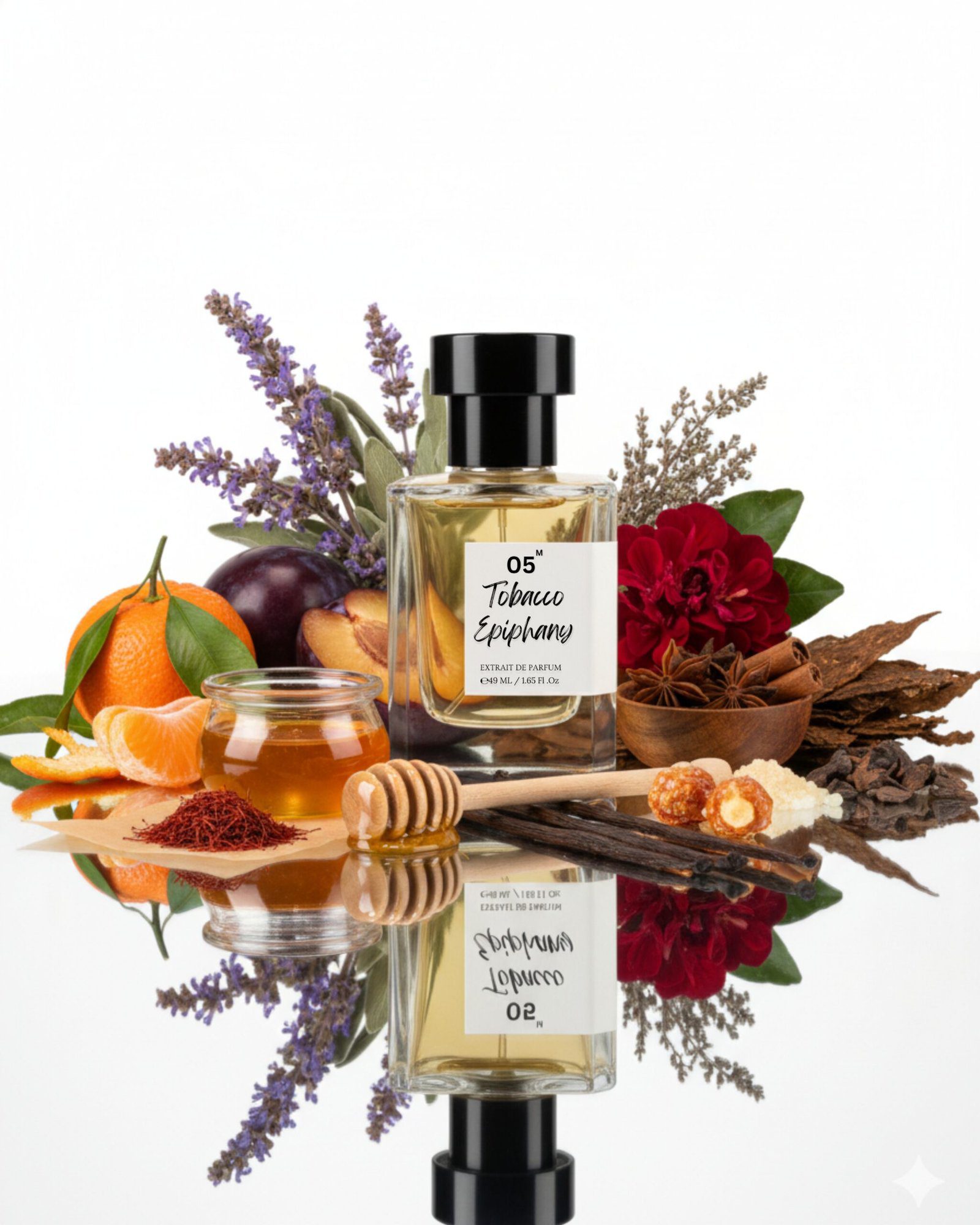
Tobacco Epiphany is a good example. It’s a fragrance that needed to sit heavy, to feel substantial, to develop over time. So we built it that way from the start. Tobacco as a warm, honeyed backbone rather than a sharp top note. very mild Spices underneath. A proper base with resins, woods, some darker ambers. Fixatives chosen to smooth the whole thing out and make it feel like a composition that’s thinking about its own lifespan.
It lasts. Not because it’s soaked in oil, but because it’s constructed intelligently. It holds through dinners, through heat, through hours. And it does that while still feeling refined, still breathing, still being wearable in an Indian summer.
What You Should Actually Pay Attention To
So when you’re evaluating a fragrance—any fragrance, not just ours—forget the percentage for a minute. Ask yourself different questions instead.
What does this smell like at the 2-3 hours? If you can, that’s the real test. Many fragrances smell fine for the first hour. Try it at six. That’s where you’ll see if anything’s actually there underneath or if it was all opening promise.
Do the base notes actually make sense? Are they materials that should linger, or is this some weird mismatch of expensive top notes propped up by cheap stuff at the bottom? Can you identify what’s keeping this scent alive?
Has anyone thought about the climate? This matters more in India than people realize. A fragrance built for Paris in October isn’t necessarily built for Bangalore in May.
Does it feel balanced across time? Or does it feel like three different fragrances mashed together?
Those questions will tell you more about longevity than any percentage ever could.
The Real Take
We’re genuinely skeptical of the “higher percentage = better” narrative. Not because we’re trying to be contrarian. It’s because our results shows something else. we might be wrong.
Longevity is built. It’s not bought. It comes from knowing which materials to choose, how to layer them, how to stabilize them. It comes from thinking about the person who’s actually going to wear this in their actual climate on their actual skin.
So when someone asks us about longevity, we don’t just tell them the concentration. We talk about the composition. We talk about base notes. We talk about whether they moisturize before applying fragrance. We talk about where they live and what the weather does to scent.
Because that’s where the real story is.
And honestly, that’s the conversation worth having.
What a Perfumer Actually Leans On for Longevity
Volatility and the scent’s skeleton
Top, heart, and base are not just marketing words; they describe families of molecules grouped by vapour pressure and evaporation rate. Citrus, green notes and some airy aromatics are naturally short-lived because their molecules evaporate fast. You can make them louder, but you can’t force them to become 10-hour notes just by upping the concentration.
What we rely on for real staying power are woods, ambers, musks and resins, carefully layered so they reveal themselves slowly on warm skin. This is where wear-time is engineered, not in a raw percentage figure.
Fixatives, not just “heavy base notes”
In our lab, fixatives are chosen deliberately—some naturals, some modern synthetics—to slow the evaporation of lighter notes and give the scent a smoother, longer drydown. That means a Bois et Fleurs perfume can feel airy and elegant in the opening but still leave a nuanced trail on the skin and clothes hours later, without needing to be oppressively thick.
Molecular weight and diffusion
Two materials can share a similar odour family yet behave miles apart on skin because of molecular weight and vapour pressure. Lighter molecules give instant brightness and throw, heavier ones linger closer and longer. Longevity is the result of orchestrating these differences so the composition “breathes” over time, instead of everything arriving and leaving at once in a loud flash.
Why Two 20% Perfumes Can Perform Very Differently
Take two perfumes on your shelf, both labelled around EDP strength:
Formula A is built mostly on bright top notes and light musks with very little backbone.
Formula B is anchored with sandalwood facets, modern amber molecules, resins and skin musks, plus considered fixatives.
On a blotter and on skin, Formula B will almost always outlast Formula A, even if the labelled concentration is identical. The heavier phase materials and fixatives are doing the real work; pushing Formula A from 20% to 25% mainly intensifies the opening rather than meaningfully extending the drydown.
This is why wear-tests over a full day tell you more than concentration numbers ever will.
Indian Skin, Indian Weather, Real-Life Wear
Performance in India is a different game from performance in a cold, dry climate, and our formulas are tested with that in mind.
Skin and prep
Dry skin tends to make fragrance vanish faster; moisturised skin holds perfume better. Applying Bois et Fleurs perfumes on lightly moisturised, unscented skin or layering over a neutral base can add more practical longevity than any “extra 5% oil” claim.
Heat, humidity and daily life
High temperatures and humidity speed up evaporation, which is why some imported scents feel weak in Indian summers even though they’re “strong” abroad. Our aim is to build scents that stay present in heat, on commutes, in AC offices and evening outings—long-wear formulas tuned for Indian climate, not just for a cooled perfumery lab.
How This Philosophy Shows Up in Tobacco Epiphany
Tobacco Epiphany being Extrait version is a dense, resinous, tobacco-and-oud-leaning composition designed to unfold slowly in Indian evenings rather than explode and vanish.
Instead of relying on one loud tobacco accord at a very high concentration, the formula layers honeyed tobacco, plum, subtle rose and saffron over a base of spices, vanilla and woods, with the tobacco sitting as a warm backdrop rather than an ashtray-loud top note. This gives a smoother, more meditative wear: the opening is sweet-smoky and inviting, the heart turns deeper and spicier, and the drydown settles into a soft haze of dried tobacco leaf, woods and vanilla.
Because the base is built on slower-evaporating materials, Tobacco Epiphany holds well on skin and fabrics through long dinners, get-togethers, even temple or hawan settings, without feeling shouty or cloying in Indian heat. The goal here isn’t “beast mode at all costs,” but a composed, long-wear scent that feels like a warm aura around you rather than a cloud attacking everyone in the room.
How to Judge a Long-Lasting Perfume (Beyond the Percentage)
When you try a Bois et Fleurs scent, the most useful questions aren’t “How many ml of oil is in this?” but:
What does the drydown smell like after 4-5 hours on my skin and clothes?
Do the woods, musks, ambers or resins stay with me through my actual day in this weather?
Does the scent feel balanced—evolving from top to heart to base—rather than just shouting in the opening and then disappearing?
If the answer is yes, the formula is doing its job. That’s the core Bois et Fleurs promise: original, small-batch compositions designed for Indian climate and real-world wear, where longevity is engineered into the structure—not painted on with a concentration number.
Disclaimer
This article is intended for educational purposes only and reflects our experience and research at the time of writing. Perfumery is subjective and continuously evolving. Readers are encouraged to conduct their own research and form independent conclusions.